
Imposter Syndrome Shows Up Right Before Growth Does
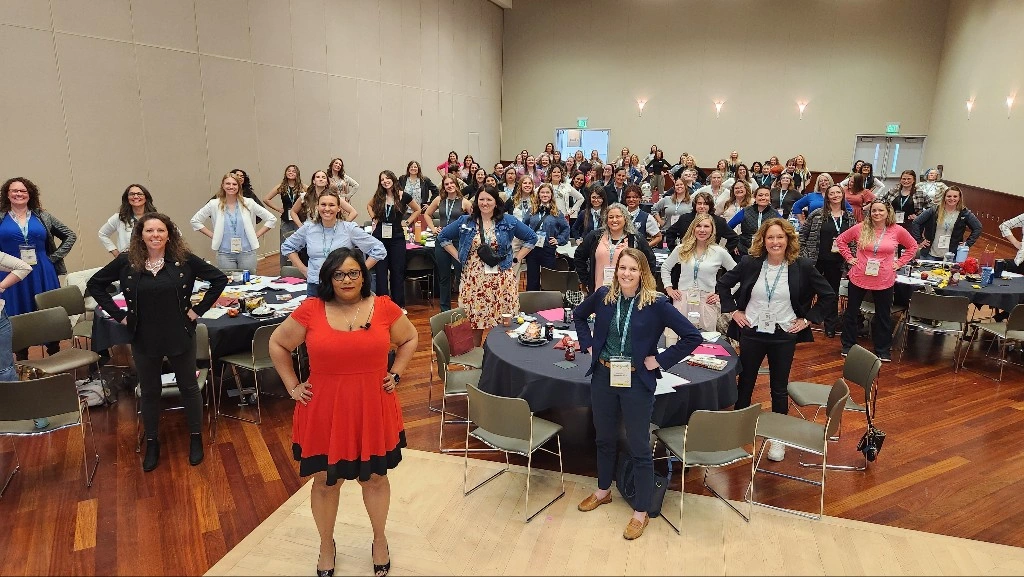
Elisa and audience during her recent Imposter Syndrome breakout session
A friend of mine posted about imposter syndrome recently, and it stayed with me longer than I expected. Not because the idea was new, but because I recognized myself in it. That post is actually what pushed me to start reading more, reflecting more, and eventually building a breakout session around the topic.
What began as a quiet moment of recognition turned into something I was suddenly talking about on stage.
At a recent Women in Business conference, I had the opportunity to lead an imposter syndrome breakout. Ironically, the first real test of everything I had been researching happened before I even got into the content.
My technology did not work.
It threw me off more than I would have expected it to. I froze for a moment. I could feel that familiar internal spiral start. The voice that says, this is not going how it is supposed to. I had a room full of people looking at me, waiting.
So I did what I now often encourage others to do. I named it.
I acknowledged what was happening, took a breath, glanced at my script, and kept going. Once I found my rhythm again, the conversation unfolded naturally. The room shifted from being a place where I felt pressure to perform to a space where we were collectively exploring something real.
After the session, several women came up to talk. They shared their own experiences, their own doubts, their own turning points. One moment stood out in a way I did not expect.
There was a group of high school students attending the conference with a teacher. One of the girls approached me and asked for my autograph.
It caught me completely off guard.
They wanted my autograph?!?!? Mine?
It was such a clear reminder of how impact is often perceived differently from the inside than it is from the outside. In a moment where I had internally questioned how I showed up, someone else saw confidence, clarity, and possibility.
That experience has stayed with me.
It reinforced something I continue to see in my own work and in the rooms where I facilitate conversations. Imposter syndrome is not usually about capability. It is about perception. It shows up most strongly when people are stepping into new visibility, new expectations, or new versions of themselves.
In these conversations, we talk about recognizing patterns. Over-preparing. Downplaying success. Assuming others have it more figured out. These responses make sense once people begin tracing where they learned them.
We explore the internal narratives people carry. The quiet beliefs about who they are allowed to be in professional spaces.
And we talk about experience. Confidence is often treated as a prerequisite. In reality, it tends to develop afterward. Competence grows through participation. Growth often feels uncertain while it is happening.
What I continue to learn is this.
Doubt does not automatically mean you are unprepared.
Sometimes it means you are stretching.
Sometimes it means you care.
And sometimes, it means you are stepping into work that matters.
If your organization is navigating growth, leadership development, or cultural change, conversations like these can create space for people to move forward with more clarity and confidence.
This is the work I care deeply about facilitating.
If you are interested in bringing this conversation to your team, conference, or community, I would love to connect.
Because often, the most important shift begins with naming what people are quietly experiencing.
And then creating the space to move through it together.
